Lock and cylinder
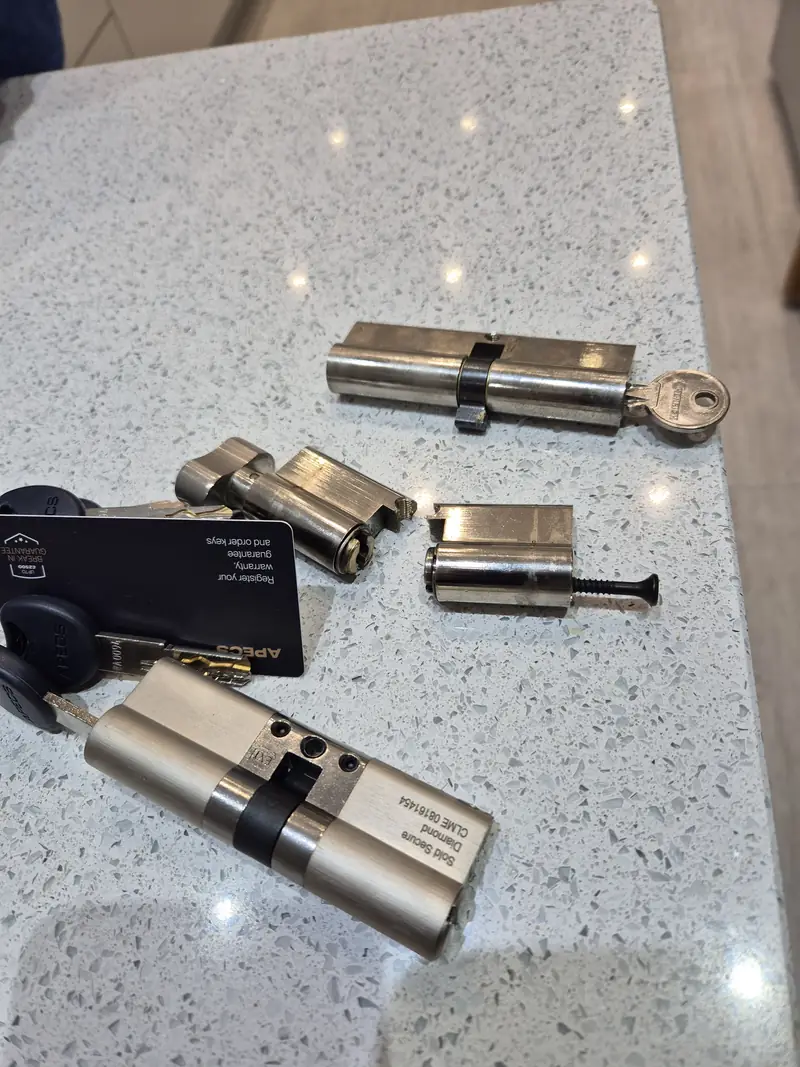
Visible damage, looseness and snapped, pulled or compromised cylinders are checked, along with whether the lock still operates reliably.
Home / Burglary Repairs
After a break-in or attempted break-in, I assess damaged locks, cylinders and locking hardware and explain the repair or replacement needed to secure the door.
I assess the locksmith-related damage before recommending work. Depending on what is affected, this can include repairing or replacing a damaged lock or cylinder, changing a compromised lock, checking handles and keeps, and checking door alignment.
For uPVC or composite doors, relevant locking components are checked where force may have affected them. The aim is secure working operation where the problem can be resolved with locksmith work.
Glazing damage, structural frame repairs or complete door replacement may also need another appropriate trade. MobileLS does not provide boarding, glazing replacement, building repairs or alarm installation.
Visible damage, looseness and snapped, pulled or compromised cylinders are checked, along with whether the lock still operates reliably.
I check affected handles or security furniture, keeps and whether force has changed how the door closes or locks. Alignment is checked where relevant.
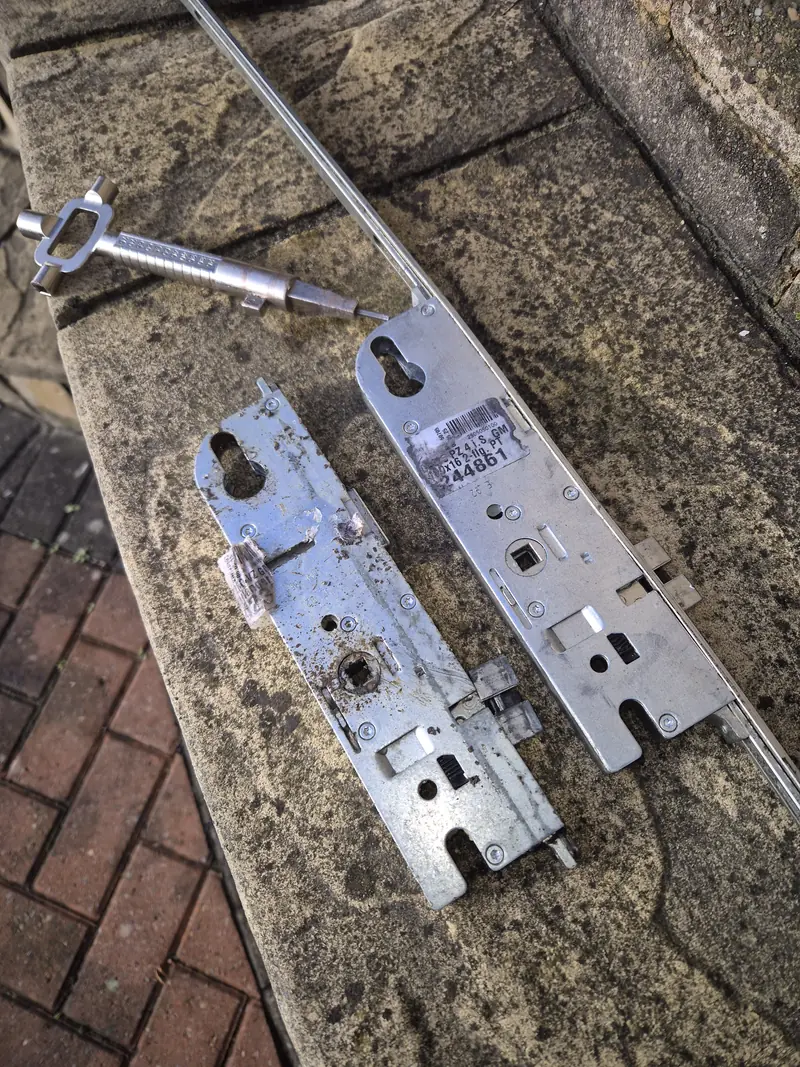
I assess whether force may have affected the wider mechanism, relevant gearbox or multipoint components, and locking points.
Where existing locksmith hardware can be restored safely and reliably.
Where the lock or cylinder is damaged, compromised or no longer provides reliable key control.
Where you want a stronger security option and the door and existing hardware are suitable.
The most expensive option is not automatically necessary. British Standard or higher-security options may be discussed where suitable. For planned upgrades and detailed replacement options, visit the lock-change page.
If house keys were taken and could be associated with the property, replacing the affected lock or cylinder can restore control over which keys operate the door. Tell me which doors the stolen keys operate.
The visible cylinder may not be the only component affected. Force can also affect relevant multipoint components, keeps, handles or alignment. I check the locksmith-related damage before recommending components for repair or replacement.
For ordinary mechanism faults unrelated to a break-in, visit the uPVC repair page.
If a burglary has just happened, contact the police first and avoid disturbing potential evidence where practical. Once the entry point can be worked on, a locksmith can assess the lock and locksmith-related damage.
General practical guidance.
I attended these burglary and attempted forced-entry locksmith jobs.
Leeds customers on their experience with MobileLS.
★★★★★
“Radu was incredibly helpful, he gave a quote up front, was very quick and professional. He also helped explain how to make further changes to make the house more secure, all at a very reasonable price.”
★★★★★
“True to his word, he turned up within the hour. After checking the lock and door, he explained what needed doing clearly and only replaced what was actually needed. So very impressed with this business.”
Locksmith Leeds MobileLS Ltd is owner-operated by locksmith Radu Oprea in Leeds.
Read MobileLS Customer Reviews →
Based in Leeds and covering the city and nearby areas.
The price depends on the damage found, lock or cylinder type, locksmith hardware affected, repair versus replacement, parts required and whether you choose a security upgrade.
No call-out fee. No VAT. Clear price before work starts. There is no single starting price that covers every burglary repair.
I can assess the damaged lock, cylinder and relevant door hardware, then repair or replace components where appropriate to secure the door. This depends on the damage being within locksmith scope; glazing, structural frame damage or complete door replacement may need another trade.
If the stolen house keys could be associated with the property, replacing the affected lock or cylinder can restore control over which keys operate the door. Tell me which doors those keys operate so the relevant locks can be considered.
Sometimes. I check the cylinder and relevant locking components, handles, keeps and alignment to see whether repair or replacement can restore secure operation. The wider mechanism may also have been affected, so a cylinder change alone may not resolve the damage.
Not necessarily. Where the problem is limited to locksmith components, suitable repair or replacement may secure the door again. Damage to glazing, the structure of the frame or the door itself may also require another appropriate trade.
Repair is considered where the existing hardware can be restored safely and reliably. A damaged or compromised lock or cylinder may need replacing. I explain the options and price before work starts.
If a burglary has just happened, contact the police first and avoid disturbing potential evidence where practical. Once the entry point can be worked on, a locksmith can assess the lock and locksmith-related damage. This is general practical guidance.
The quote depends on the damage found, lock or cylinder type, hardware affected, repair versus replacement, parts required and any chosen security upgrade. There is no call-out fee and no VAT. The price is agreed before work starts; there is no single starting price for every burglary repair.
Call or send photos of the affected lock and door to discuss the locksmith work needed.
No Call-Out Fee · No VAT · Clear Price Before Work